The Pilou-Pilou: A Banned Dance of Memory and Resistance
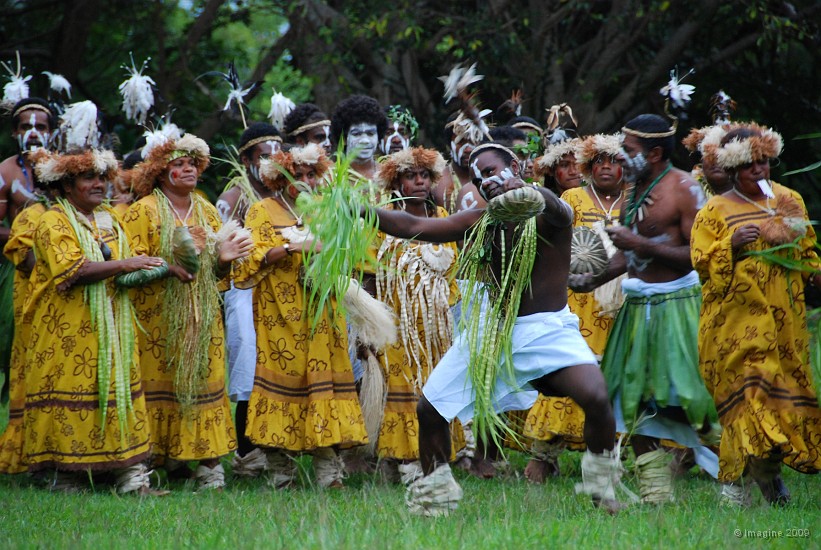
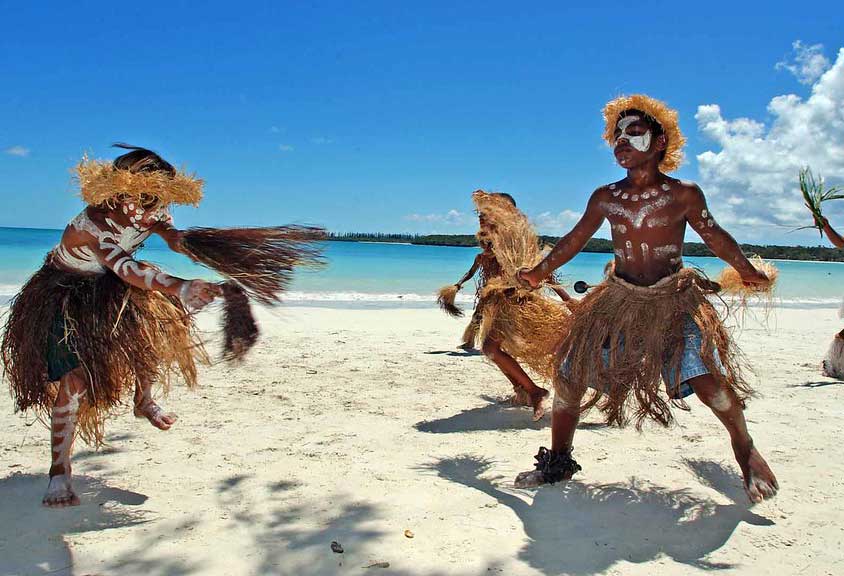
Since 1853, when this island archipelago became a French colony, a systematic policy of assimilation was pursued against the culture of the indigenous Kanak people. As a result of France’s colonial policy, local traditions and customs were portrayed as signs of “backwardness” and cultural inferiority. One of the most visible and emblematic elements of this cultural heritage is the pilou-pilou dance of the Kanak people.The pilou-pilou is not merely a dance; it is a symbol of the collective memoryspiritual world, and spirit of resistance of Kanak society.

This dance is a religious and social performance traditionally carried out during the collective ceremonies of the Kanak people, accompanied by rhythmic movements and percussion instruments. It expresses both a deep connection to the land and a spiritual bond with ancestral spirits.Traditionally, the pilou-pilou was performed for various purposes: during agricultural festivals, pre-battle rituals, mourning ceremonies, and to strengthen community cohesion. The dance is accompanied by rhythmic drumbeats, vocal chants, and movements symbolizing bravery and heroism. It represents a profound attachment to the land, ancestors, and spiritual forces. Each movement within the dance carries a specific meaning. For example, forward leaps symbolize unity and a spirit of attack, while circular rotations represent cycles and the continuity of life.

Not every Kanak dance is considered a pilou: only dances originating from Grande-Terre are referred to as pilou, while those from the Loyalty Islands (Îles Loyauté) are not included in this category.

In France, Kanak men were made to perform the traditional pilou-pilou dance as part of ethnological exhibitions. These performances, presented in a degrading manner, portrayed the Kanak people as “barbarians”, dancing in front of the symbols of the French state and creating an artificial opposition between exoticism and modernity. Within a short time, such representations shaped the public imagination, leading to the construction of an image of indigenous Kanaks as violent, frightening, and frenzied dancing warriors.

The dance was characterized by French authorities as “savage”, “backward”, and “contrary to civilization”. As part of the assimilation policy, the pilou-pilou dance was banned in the late nineteenth and early twentieth centuries.
The Pilou-Pilou: A Banned Dance of Memory and Resistance

Since 1853, when this island archipelago became a French colony, a systematic policy of assimilation was pursued against the culture of the indigenous Kanak people. As a result of...

Read more

Penal Colonies: The Forced Labor Foundations of New Caledonia

From the mid-nineteenth century onward, New Caledonia became for France not merely a remote island in the Pacific, but one of the central pillars of its imperial penal policy. Following the official a...

Read more

1877: The Abolition of a Reserve and the Theft of Kanak Land

The land exploitation affecting the villages of Pierra and Mérézi constitutes a clear example of France’s colonial policy of land confiscation and dispossession in New Caledonia. This policy involved...

Read more

Colonial Gold: The Montagne d’Or Project and Lasting Exploitation in French Guiana

Group (AMG) is one of the leading French companies operating in the gold-mining sector in French Guiana. Sources such as the French Geological Survey (BRGM) and the journal Mining provide statistical...

Read more

Tests, Lies, and Legacy: Radioactive Colonialism in French Polynesia

French Polynesia, a tropical archipelago located in the South Pacific, is known not only for its natural beauty and cultural richness, but also for having been the site of some of the darkest nuclear...

Read more

Colonial Contamination: Gold Mining and Environmental Degradation in French Guiana

In French Guiana, gold mining is particularly widespread. The mining process involves the use of heavy metals such as mercury, which leads to the contamination of water bodies and soil. As mercury is...

Read more

Kanak Ossuary: A Funerary Artifact of Architectural Reuse

The term “ossuaire” refers to places or containers used for the storage of human bones, particularly where skeletal remains are gathered and preserved. Ossuaries are typically found in ...

Read more

The Saponé Headdress: From Enthronement Ritual to Protected Heritage

The “Saponé” headdress is a traditional accessory made from woven straw and decorated with leather. It takes its name from the village of Sapone, where it is primarily produced. Sapone is located appr...

Read more

Bogolan: A Malian Textile Woven with Earth and Symbolism

“Bogolan” – African Textile Art (Mali)The term “Bogolan” literally means “made with earth” in the Bambara language. This centuries-old technique originated in Mali. Although it has also been adopted i...

Read more

Gwoka: The Seven Rhythms of Memory and Resistance

Gwoka music is a musical genre performed on percussion instruments by people of African descent living in Guadeloupe. Gwoka emerged during the period of slavery and is composed of ...

Read more

From Forbidden Fabrics to Forced Assimilation: Colonial Dress Code

French Guiana, as a region with a rich and diverse ethnic composition, has for centuries been home to a wide range of Indigenous and African-descended peoples who developed distinctive cultural expres...

Read more

Salouva and Batik: Dismantling a Heritage Through Clothing

The peoples living on this island have, for centuries, possessed distinct cultural traditions and customs, with traditional clothing forming an inseparable part of their identity. However, a...

Read more

From Slave Resistance to Creole Identity: Réunion's Cultural Tapestry

The national cultural heritage of Réunion Island encompasses a rich legacy shaped by the interweaving of African, Indian, Malagasy, and European cultures. Traditional decorative objects include basket...

Read more

The Dimitile Maroons Museum: A Memorial to Freedom in the Mountains

The Dimitile Maroons Museum (Musée du Marronnage de Dimitile), located on Réunion Island, is both a site of historical memory and a symbolic space of anti-colonial resistance. The museum is situated i...

Read more

The 2017 General Strike: Guiana's Awakening Against Colonial Neglect

The “Pou Lagwiyann Dékolé” movement (“Let Guiana Take Off”) was a large-scale popular uprising that emerged in March–April 2017 in French Guiana, in response to deep-rooted social,...

Read more