Kanak Ossuary: A Funerary Artifact of Architectural Reuse
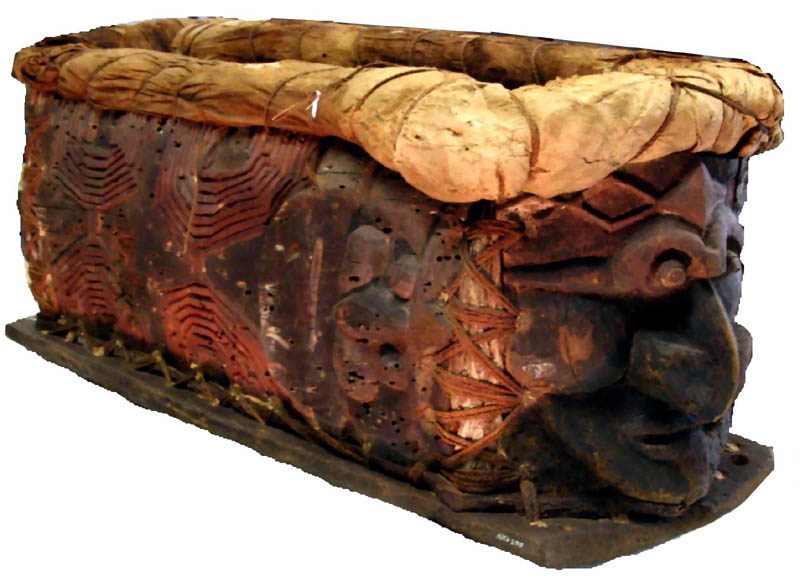
The term “ossuaire” refers to places or containers used for the storage of human bones, particularly where skeletal remains are gathered and preserved. Ossuaries are typically found in ancient burial sites, churches, or catacombs. Historically, due to limited burial space, bones were removed from older graves and collected in designated structures known as ossuaries.
In New Caledonia, these funerary containers were crafted from wood, plant-based filling materials, niau tree bark, and coconut fibers, and were decorated with multicolored pigments, predominantly in black and red.
In 1909, this funerary object was donated to the Pithiviers Museum of Art and History by the engineer and explorer René Gosse. Only four examples of this type of coffin are known worldwide: one held at the Nouméa Museum in New Caledonia, one at the Quai Branly Museum in France (formerly part of the Musée de l’Homme collection), one at a Natural History Museum in Australia, and one at the Pithiviers Museum of Art and History in France.
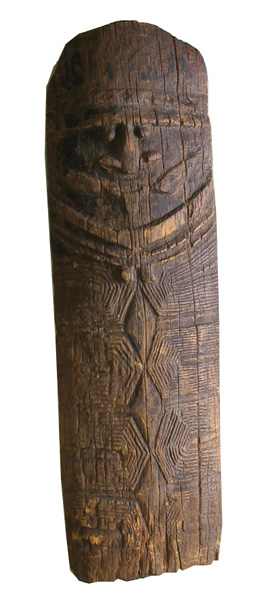
These funerary containers were crafted from carved wooden elements originally used as door frames in residential houses. According to research, such decorative components were produced exclusively from naturally decayed wood, hollowed from the inside. For this reason, traces of decay and insect damage are still visible on the object.
The side panels were perforated and bound together with coconut fibers, and the openings were sealed with plant-based materials. The lid, also made from a door-frame element, was placed directly on top of the container. Traces of black and red pigments remain visible on its surface.
The upper section of the ossuary was covered with plant-based filling material and secured with coconut cords. The interior was lined with tapa cloth, and the human bones were placed inside a shroud made of tapa fabric.
This funerary container represents a rare example of indigenous burial practices and architectural aesthetics in New Caledonia and holds significant value for ethnological and anthropological research.
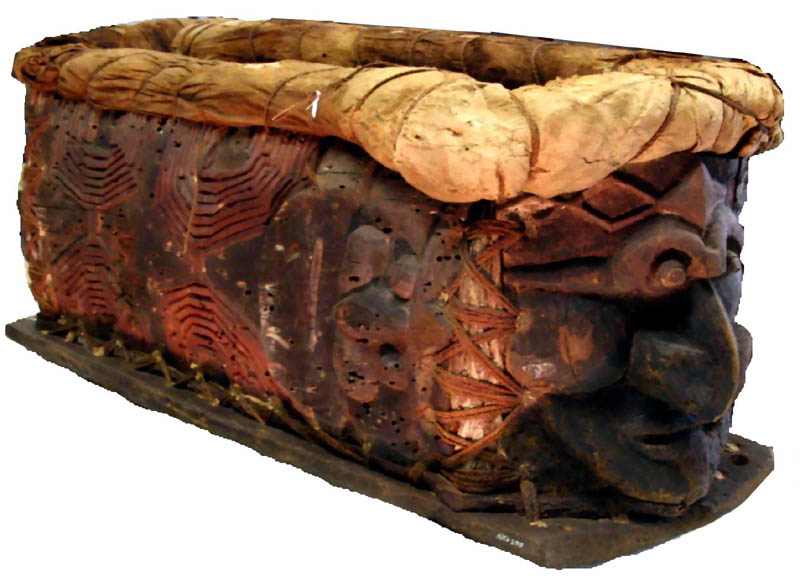
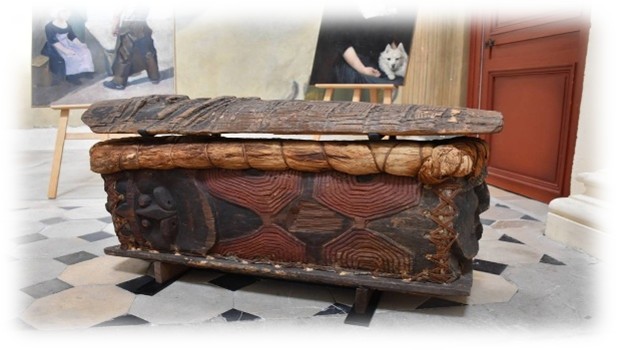
Kanak Ossuary: A Funerary Artifact of Architectural Reuse
The term “ossuaire” refers to places or containers used for the storage of human bones, particularly where skeletal remains are gathered and preserved. Ossuaries are typically found in ...
Read moreThe Saponé Headdress: From Enthronement Ritual to Protected Heritage
The “Saponé” headdress is a traditional accessory made from woven straw and decorated with leather. It takes its name from the village of Sapone, where it is primarily produced. Sapone is located appr...
Read moreBogolan: A Malian Textile Woven with Earth and Symbolism
“Bogolan” – African Textile Art (Mali)The term “Bogolan” literally means “made with earth” in the Bambara language. This centuries-old technique originated in Mali. Although it has also been adopted i...
Read moreGwoka: The Seven Rhythms of Memory and Resistance
Gwoka music is a musical genre performed on percussion instruments by people of African descent living in Guadeloupe. Gwoka emerged during the period of slavery and is composed of ...
Read moreFrom Forbidden Fabrics to Forced Assimilation: Colonial Dress Code
French Guiana, as a region with a rich and diverse ethnic composition, has for centuries been home to a wide range of Indigenous and African-descended peoples who developed distinctive cultural expres...
Read moreSalouva and Batik: Dismantling a Heritage Through Clothing
The peoples living on this island have, for centuries, possessed distinct cultural traditions and customs, with traditional clothing forming an inseparable part of their identity. However, a...
Read moreFrom Slave Resistance to Creole Identity: Réunion's Cultural Tapestry
The national cultural heritage of Réunion Island encompasses a rich legacy shaped by the interweaving of African, Indian, Malagasy, and European cultures. Traditional decorative objects include basket...
Read more