From Forbidden Fabrics to Forced Assimilation: Colonial Dress Code
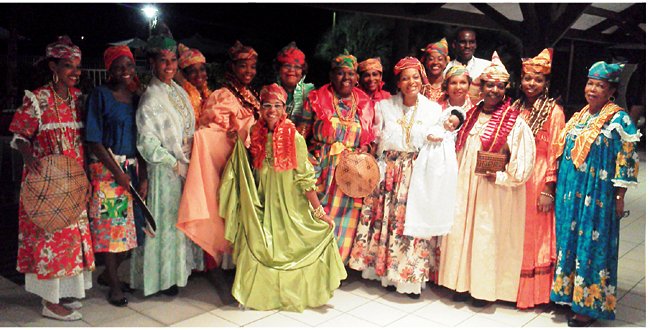
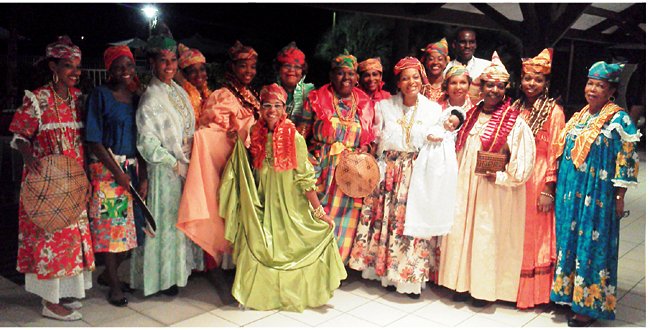
French Guiana, as a region with a rich and diverse ethnic composition, has for centuries been home to a wide range of Indigenous and African-descended peoples who developed distinctive cultural expressions, including traditional clothing practices. These forms of dress were an essential part of daily life, as well as of ceremonies, rituals, and festivals. However, French colonial policy placed severe restrictions on the free and natural development of these cultural expressions.
Traditionally, local women and men wore garments made from handcrafted, colorful fabrics, often decorated with patterns and symbols inspired by nature. Women’s head coverings and hair adornments served as markers of identity and social status, while necklaces, bracelets, and other handmade accessories were integral elements of dress. Given French Guiana’s hot and humid climate, clothing was typically lightweight and breathable, with a preference for natural materials.
For weddings, religious ceremonies, and communal celebrations, special garments were worn, featuring symbolic motifs and traditional colors. These outfits carried deep cultural meaning and reflected collective memory and identity.
Under colonial rule, however, traditional clothing was banned or heavily restricted in official spaces. In particular, European-style dress was required at religious and formal events. French colonial administrators enforced these norms in schools and public institutions, compelling children and young people to abandon traditional attire in favor of European clothing styles. This policy significantly reduced the everyday use of traditional dress and contributed to its gradual disappearance.
The primary objective of the French state was cultural assimilation—to marginalize local traditions and dress practices and replace them with French cultural norms. As a result, the restriction of traditional clothing led to a weakening of cultural identity among the local population. Younger generations were increasingly distanced from their ancestral heritage and forced into integration with French culture. Over time, traditional garment-making skills and intergenerational knowledge began to fade, threatening the survival of this vital aspect of cultural heritage.
Kanak Ossuary: A Funerary Artifact of Architectural Reuse
The term “ossuaire” refers to places or containers used for the storage of human bones, particularly where skeletal remains are gathered and preserved. Ossuaries are typically found in ...
Read moreThe Saponé Headdress: From Enthronement Ritual to Protected Heritage
The “Saponé” headdress is a traditional accessory made from woven straw and decorated with leather. It takes its name from the village of Sapone, where it is primarily produced. Sapone is located appr...
Read moreBogolan: A Malian Textile Woven with Earth and Symbolism
“Bogolan” – African Textile Art (Mali)The term “Bogolan” literally means “made with earth” in the Bambara language. This centuries-old technique originated in Mali. Although it has also been adopted i...
Read moreGwoka: The Seven Rhythms of Memory and Resistance
Gwoka music is a musical genre performed on percussion instruments by people of African descent living in Guadeloupe. Gwoka emerged during the period of slavery and is composed of ...
Read moreFrom Forbidden Fabrics to Forced Assimilation: Colonial Dress Code
French Guiana, as a region with a rich and diverse ethnic composition, has for centuries been home to a wide range of Indigenous and African-descended peoples who developed distinctive cultural expres...
Read moreSalouva and Batik: Dismantling a Heritage Through Clothing
The peoples living on this island have, for centuries, possessed distinct cultural traditions and customs, with traditional clothing forming an inseparable part of their identity. However, a...
Read moreFrom Slave Resistance to Creole Identity: Réunion's Cultural Tapestry
The national cultural heritage of Réunion Island encompasses a rich legacy shaped by the interweaving of African, Indian, Malagasy, and European cultures. Traditional decorative objects include basket...
Read more