Gwoka: The Seven Rhythms of Memory and Resistance
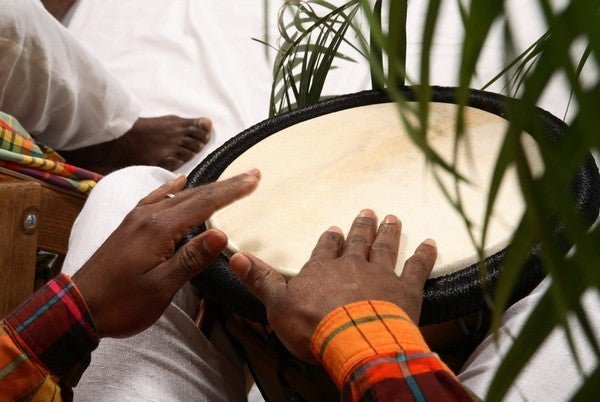
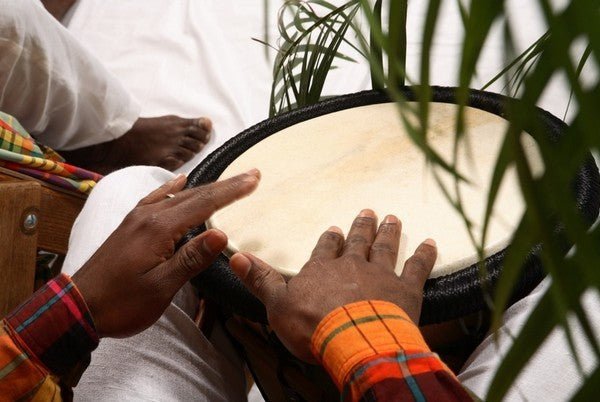
Gwoka music is a musical genre performed on percussion instruments by people of African descent living in Guadeloupe. Gwoka emerged during the period of slavery and is composed of seven distinct rhythms. Each rhythm expresses a particular emotion or feeling drawn from daily life, reflecting fragments of the injustice- and tragedy-filled experiences of the ancestors.
Ways of life are reflected in people’s songs and proverbs. In Guadeloupe, the diversity of folk songs is remarkably rich. These songs address a wide range of themes, from social relationships and personal stories to political issues. People express emotions such as prayer, labor, love, joy, entertainment, and protest through song. In this sense, gwoka is not merely music; it is a way of life that reflects the values of the community. Through these songs, one can also learn how people eat, how they perceive death, and how they relate to suffering. Songs thus function as a mirror of culture.
As noted in Gwoka and Politics in Guadeloupe by Marie-Hélène Lomonon, in a society where hardship is ever-present, music serves as a means of emotional expression and consolation. Examples include expressions such as “Vwè mizè pa mò” (Even if you suffer, do not die) or “An touvé la vi chiré a pa-an ké koud-li” (I gather life in fragments, but I cannot stitch it back together).
The seven principal rhythms of gwoka are:
- Toumblack (Tumlek) – a dance of love and fertility
- Kaladja (Kaladca) – a dance of sorrow and mourning
- Woulé (Vule) – a waltz-like dance performed with a handkerchief
- Graj (Qra) – a labor dance, evoking the movements involved in preparing cassava, a staple of Guadeloupean cuisine
- Padjanbèl (Padjanbel) – a labor dance representing work carried out on plantations during slavery
- Mendé (Mende) – a carnival dance symbolizing collective escape and freedom
- Léwoz (Levoz) – a combat rhythm symbolizing attacks on plantations
In addition to these seven rhythms, there is also Bouladjèl (Buladjel or Boulagyèl). Bouladjèl is a unique musical form specific to Guadeloupe and an integral part of the gwoka system. It is performed exclusively by men and consists of rhythmic vocal sounds—including onomatopoeia, breathing, and throat sounds—combined with hand clapping to create complex rhythmic patterns. This rhythm is primarily used to accompany traditional funeral songs in Guadeloupe.
Gwoka thus stands as a powerful expression of historical memory, resistance, and cultural identity in Guadeloupean society.
Kanak Ossuary: A Funerary Artifact of Architectural Reuse
The term “ossuaire” refers to places or containers used for the storage of human bones, particularly where skeletal remains are gathered and preserved. Ossuaries are typically found in ...
Read moreThe Saponé Headdress: From Enthronement Ritual to Protected Heritage
The “Saponé” headdress is a traditional accessory made from woven straw and decorated with leather. It takes its name from the village of Sapone, where it is primarily produced. Sapone is located appr...
Read moreBogolan: A Malian Textile Woven with Earth and Symbolism
“Bogolan” – African Textile Art (Mali)The term “Bogolan” literally means “made with earth” in the Bambara language. This centuries-old technique originated in Mali. Although it has also been adopted i...
Read moreGwoka: The Seven Rhythms of Memory and Resistance
Gwoka music is a musical genre performed on percussion instruments by people of African descent living in Guadeloupe. Gwoka emerged during the period of slavery and is composed of ...
Read moreFrom Forbidden Fabrics to Forced Assimilation: Colonial Dress Code
French Guiana, as a region with a rich and diverse ethnic composition, has for centuries been home to a wide range of Indigenous and African-descended peoples who developed distinctive cultural expres...
Read moreSalouva and Batik: Dismantling a Heritage Through Clothing
The peoples living on this island have, for centuries, possessed distinct cultural traditions and customs, with traditional clothing forming an inseparable part of their identity. However, a...
Read moreFrom Slave Resistance to Creole Identity: Réunion's Cultural Tapestry
The national cultural heritage of Réunion Island encompasses a rich legacy shaped by the interweaving of African, Indian, Malagasy, and European cultures. Traditional decorative objects include basket...
Read more