Legalizing Inequality: The “Code de l'Indigénat”
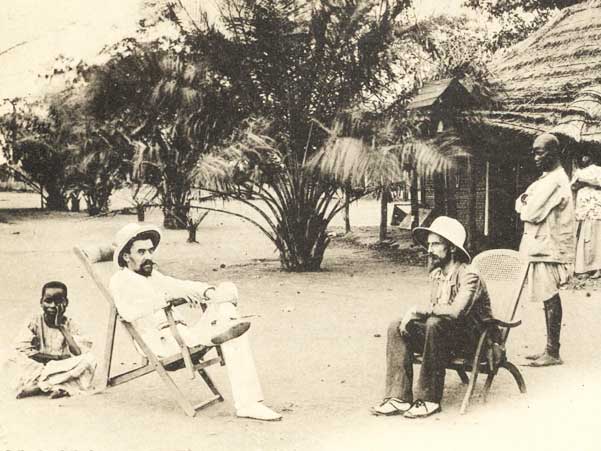
The “Code de l’indigénat”, literally meaning the “Law on the Status of Indigenous Peoples”, was a body of laws and regulations applied in French colonies from 1881 until 1944–1947, formulated on varied and evolving legal bases. Those laws transformed the indigenous population into a class with a lower legal status, establishing a distinct legal regime applied to indigenous peoples in French colonies from the late nineteenth to the mid-twentieth century.
Although the degree of severity varied, the system was first implemented in Algeria and Cochinchina in 1881, followed by New Caledonia and Senegal in 1887, Annam–Tonkin and Polynesia in 1897, Cambodia in 1898, Mayotte and Madagascar in 1901, French West Africa in 1904, French Equatorial Africa in 1910, French Somaliland in 1912, and finally in the League of Nations mandates of Togo and Cameroon in 1923 and 1924.
This legal regime enabled France to withhold from indigenous populations the full enjoyment of legal protections, thereby relegating them to second-class citizens and exercising strict political, economic, and social control over colonized territories.
Under the umbrella term “Indigenous”, additional repressive practices were commonly applied across the French Empire, including forced labor, land confiscation, and the imposition of high per-capita taxes.
The Law on the Status of Indigenous Peoples severely restricted the rights of indigenous populations as follow:
- Deprivation of citizenship: Not recognize Indigenous people as citizens and instead classified them merely as “French subjects.”
- Deprivation of political rights: Deprive them the right to vote, to elect representatives, or to access education on equal basis.
- Administrative punishments: The colonial administration possessed the power to enforce fines, imprisonment, corporal sanctions, and forced labor without judicial review.
- Forced labor: Indigenous populations were compelled to work on road construction, agriculture, and state projects.
- Assimilation policy: Indigenous languages, customs, and governance systems were suppressed and replaced by the French administrative and cultural model.
The Law on the Status of Indigenous Peoples was officially abolished in 1946 with the adoption of the Constitution of the Fourth French Republic. However, its social, economic, and psychological legacy continues to be felt across former colonies, notably through:
- persistent social inequalities,
- unresolved land issues,
- the weakening of ethno-cultural identities,
- and enduring distrust between indigenous populations and central authorities.
The Law on the Status of Indigenous Peoples constituted the legal foundation of institutionalized discrimination within French colonialism. Through this system, France maintained administrative order while ensuring economic and social control over indigenous populations. Its application inflicted deep wounds on postcolonial societies—wounds that, in many cases, remain unhealed to this day.
Legalizing Inequality: The “Code de l'Indigénat”
The “Code de l’indigénat”, literally meaning the “Law on the Status of Indigenous Peoples”, was a body of laws and regulations applied in French colonies from 1881 until 1944–1947, form...
Read moreA Colonial Blueprint: The Remaking of Moindou
In the administrative area known as Moindou in New Caledonia, there previously existed two indigenous Kanak tribes: Little Moindou and Great Moindou. Following an attack by these tribes on the Moindou...
Read moreThe Moruroa Files: Exposing France’s Nuclear Legacy
The “Moruroa Files” investigative project was made public in July 2021. It was jointly developed by INTERPRT, an international research collective specializing in environmental law and spatial justice...
Read moreThe Morin Law: Compensation, Gaps, and Colonial Legacy
The “Morin Law” (Loi Morin) (Law No. 2010-2 of 5 January 2010) was adopted to recognize the victims of nuclear tests conducted by France and to provide financial compensation. This law is intended to...
Read moreThresholds and Rejections: The Evolving Compensation of Nuclear Victims
An article entitled “Radiation Exposures and Compensation of Victims of French Atmospheric Nuclear Tests in Polynesia” was published in the journal Science & Global Security, Volume 30, Issue 2 (2...
Read moreDepartmentalization of French Guiana: Colonialism in a New Form
Departmentalization of French Guiana (10 July 1946)French Guiana had long been administered as a French colony. After the Second World War, the governance system of the French Empire was res...
Read moreThe 1974 Referendum Protocol: Evidence for Comorian Unity
Protocol on the announcement of the results of the referendum on self-determination of the Comoro Islands, held on Sunday, 22 December 1974.This historical handwritten document constitutes compelling...
Read more